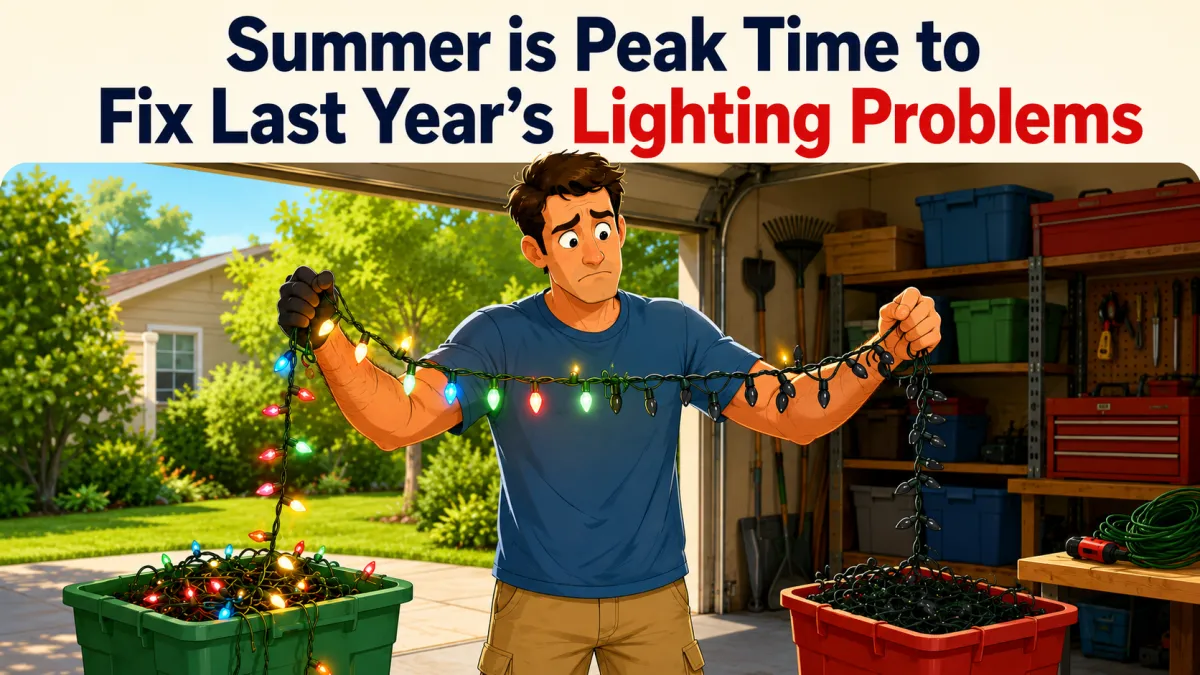
Summer is Peak Time to Fix Last Year's Lighting Problems: Here's What Homeowners Missed
The holidays are over. The lights are down. The decorations are stored away. And if you're like most homeowners, you probably didn't take time to closely inspect what happened to your Christmas display over the season. Maybe some lights stopped working mid-December. Maybe you noticed flickering in January. Maybe entire sections just failed and you switched them off, planning to "deal with it later."
Summer is "later." And if you want a beautiful, reliable display this coming November, now is the time to assess what went wrong last year. The difference between homeowners who evaluate their lighting in June and those who wait until October is significant: early evaluators know what they're working with, have time to source replacements or plan upgrades, and can book professional installation with Triad Christmas Lights well before peak season. Late evaluators scramble, overpay for rush services, and often settle for quick fixes instead of quality solutions.
This guide walks you through the common problems homeowners encounter with Christmas light displays and explains why summer assessment—ideally with professional help from Triad Christmas Lights—makes all the difference for next season.
The Most Common Problem: Failed Lights and Dead Sections
The most frequent issue homeowners face is simple: lights stop working. Sometimes it's a few individual bulbs. Sometimes it's entire strands. Sometimes it's entire sections of your display that simply go dark mid-season.
Why Lights Fail
Christmas lights fail for several reasons. Traditional incandescent bulbs have limited lifespans and burn out regularly. LED lights, while more durable, can fail due to water damage, power surges, or manufacturing defects. Lights exposed to NC's humidity and temperature fluctuations are especially vulnerable—moisture seeps into connections, corrodes metal contacts, and causes failures that seem random but are actually predictable.
String lights connected end-to-end create a problem: when one bulb fails in an older incandescent string, the entire string can go dark. You find yourself hunting through dozens of bulbs trying to find the bad one, often replacing several before finding the culprit. It's frustrating, time-consuming, and exactly the kind of problem that discourages people from decorating next year.
What You Should Check Now
Summer is the perfect time to test your lights while they're in storage. Take out each string of lights. Plug them in. Do they work? Do all bulbs illuminate? Are there any flickering or dim sections? Make a list of which strings failed and which worked perfectly.
For strings that worked, inspect the wiring. Look for cracks in insulation, damaged sockets, or corrosion on connections. Even if lights worked this year, visible damage means they might not work reliably next year—especially after spending months in a storage environment where moisture accumulates.
This assessment takes an hour or two and gives you crucial information. Triad Christmas Lights professionals do this evaluation during consultations, identifying which of your existing lights are worth keeping versus which should be replaced. For homeowners considering working with Triad Christmas Lights this year, knowing your light inventory makes the consultation more efficient and helps designers propose appropriate solutions.
The Second Problem: Damaged Wiring and Electrical Issues
Beyond individual light failure, many homeowners encounter wiring problems they didn't notice or understand during the season.
Water Damage and Corrosion
North Carolina's humidity is no joke. Moisture accumulates on connections, in junction boxes, and inside extension cords. Over a month of constant exposure to December rain, freezing nights, and humidity, even "weatherproof" connections can corrode. You might not notice this during the holiday season because the display still works—but the damage is happening.
When you store lights in a garage or basement without proper ventilation, this moisture doesn't dry out. It sits on the connections all spring and summer, continuing to corrode. By next November, what worked fine in January may not work at all.
Extension Cord Degradation
Extension cords wear out. The plastic insulation cracks, revealing wire underneath. Connections loosen and corrode. Plugs become loose or problematic. A cord that worked fine last year might be unsafe this year. This is exactly the kind of problem homeowners overlook—the lights still work (because the damaged section of cord isn't critical), but the safety risk has increased significantly.
Loose Connections and Damaged Sockets
Inspect every connection point on your stored lights. Where do cords connect to each other? Are the connections tight? Is there corrosion or discoloration? Where do lights plug into power sources? Are those connections secure and clean?
Loose connections create intermittent failures—lights that work sometimes but not consistently. They also create fire hazards. Homeowners often tolerate intermittent problems ("the lights will come on if I jiggle the cord"), not realizing they're dealing with a safety issue.
Professional assessment from Triad Christmas Lights includes this kind of detailed inspection. Their team identifies whether your existing wiring and connections are safe to reuse or need replacement before installation begins.
The Third Problem: Poor Design That Didn't Work
Beyond technical failures, many homeowners realize mid-season that their display design simply didn't work well.
Lights Were Too Dim or Too Bright
Maybe you bought discount lights that didn't produce the brightness you expected. Maybe you used too many lights in one area and overwhelmed your home's facade. Maybe you used too few lights and the display looked sparse and underwhelming. These are design problems that became obvious only after the lights were installed and lit up.
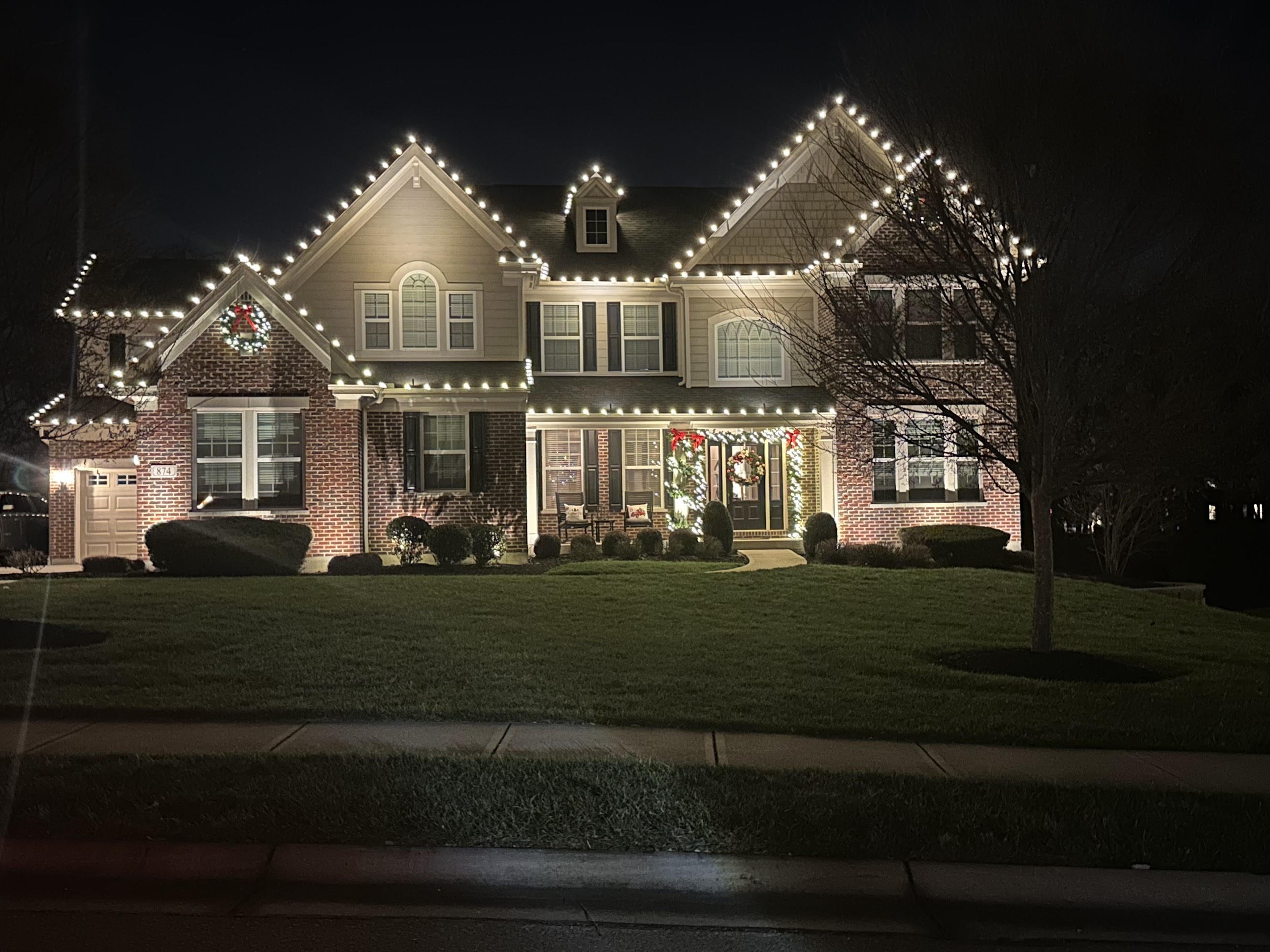
Brightness is subjective, but it's also measurable. Professional lighting designers, like those at Triad Christmas Lights, understand how to layer lights for visual impact—combining different light densities and colors to create displays that look intentional and beautiful rather than random or sparse.
Color Choices Didn't Complement the Home
You chose cool white lights thinking they'd look modern and sophisticated. Instead, they made your traditional home look cold and unwelcoming. Or you chose warm white expecting coziness but ended up with a dim, brownish appearance that barely showed your home's architectural features.
Color temperature matters enormously. The right color can highlight your home's best features and create emotional resonance. The wrong color can make even a beautiful home look uninviting. This is another area where professional designers add value—Triad Christmas Lights consultations include discussion of how different colors interact with your home's specific architecture and materials.
Light Placement Missed Architectural Opportunities
Maybe you wrapped lights around the roofline but missed the beautiful columns at your entryway. Maybe you focused on the front facade and ignored landscaping that could have been highlighted. Maybe you used traditional outline lighting when uplighting would have created more dramatic effect.
These are design mistakes you can't fully appreciate until the lights are up and you see them lit every evening for weeks. By then, it's too late to adjust without taking everything down. Summer assessment allows you to think through what you'd do differently—exactly the kind of planning Triad Christmas Lights does during design consultations.
Why Professional Assessment Matters
You could do this evaluation alone. Unpack the lights. Test them. Inspect the wiring. Make notes. That's certainly possible. But professional assessment from Triad Christmas Lights adds value that most homeowners don't consider.
Expertise in What to Look For
Professional installers know what indicates safety concerns, reliability problems, or design limitations. They've seen thousands of lighting installations and understand patterns. A damaged socket that seems fine to you might be a red flag to an experienced installer. A color choice that worked okay in your estimation might be obviously suboptimal to a professional eye trained in design principles.
Access to Better Solutions
Once problems are identified, what's the solution? You might research and spend hours trying to find replacement bulbs or cords that match your existing setup. Triad Christmas Lights has suppliers, knows what's available, understands quality differences, and can recommend cost-effective solutions. Often, replacing an entire string of lights with new professional-grade options costs less than trying to nurse along failing older lights through another season.
Opportunity to Plan a Better Display
Summer assessment isn't just about fixing problems—it's about planning a better display. With problems identified and solutions understood, you have months to think through design changes. Want to add uplighting to landscape features you didn't highlight before? Summer is when to plan that with Triad Christmas Lights. Want to change your color palette? Summer is when to explore options and commit to a design.
By the time October arrives, your vision is clear. You've consulted with Triad Christmas Lights. You know what you want. You can book installation confidently rather than scrambling to figure it out under November pressure.
Taking Action This Summer
Don't wait until October to assess last year's problems. Here's what to do now:
Step 1: Unpack and Inspect
Take out your stored lights. Plug in each string and verify that lights work. Inspect wiring for damage. Make a list of what failed and what needs replacement.
Step 2: Identify Design Issues
Look at photos from last holiday season. What worked? What didn't? What would you change? What architectural features did you miss?
Step 3: Research Solutions
If you're comfortable handling repairs yourself, research replacement bulbs and cords. If you'd rather have professionals handle it, that's where Triad Christmas Lights comes in.
Step 4: Schedule a Consultation
Contact Triad Christmas Lights for a free consultation. Discuss your lighting history, show them your stored lights, and ask their professional assessment. What can be salvaged? What should be replaced? What design improvements would they recommend?
This consultation costs nothing and gives you professional perspective. Triad Christmas Lights will help you understand your options and timeline, allowing you to make informed decisions about whether to repair existing lights, upgrade to new professional-grade options, or pursue a completely new design.
How can I tell if my Christmas lights are still safe to use?
Inspect wiring for cracks or damage, check connections for corrosion, and test functionality. If anything looks questionable, it's not worth the risk. Triad Christmas Lights can assess safety professionally during a consultation.
Is it worth replacing individual bulbs or should I buy new strings?
If only a few bulbs failed on quality strings, replacement bulbs make sense. If multiple strings failed or wiring is damaged, new strings are usually more cost-effective and reliable. Triad Christmas Lights can help you evaluate what's worth keeping versus replacing.
What's the difference between the lights I stored and professional-grade lights used by Triad Christmas Lights?
Professional lights are built for durability and reliability. They're designed to work in harsh conditions, connections are weatherproof, and failure rates are significantly lower. Professional-grade LED lights last much longer and maintain consistent brightness throughout the season.
Can I use last year's lights if I fix the damaged ones?
Yes, if the wiring and connections are sound and all bulbs work reliably. Triad Christmas Lights can assess whether your existing lights are worth reusing or if investment in new professional-grade options makes more sense.
What should I store lights in to prevent moisture damage?
Store lights in sealed, airtight containers in a climate-controlled space. Avoid basements and garages where humidity accumulates. Use silica gel packets inside containers to absorb moisture. Keep lights organized by string to make testing easier next year.
How much does it cost to have lights professionally assessed?
Triad Christmas Lights offers free consultations. There's no charge for professional assessment and recommendations. You only pay if you decide to move forward with repair or installation services.
Can I ask Triad Christmas Lights to store my lights during off-season?
Some professional installation companies offer storage services. Contact Triad Christmas Lights directly to ask about storage options they might provide.
If I find problems now, can I book installation for fall?
Absolutely. Early assessment allows you to book installation months in advance. Triad Christmas Lights appreciates early bookings because it gives them scheduling flexibility and allows designers to create custom plans without November pressure.
What if my lights are beyond repair?
That's an opportunity to upgrade to better options. Professional-grade LED lights from Triad Christmas Lights cost more upfront but last longer, work more reliably, and create better-looking displays. Over multiple seasons, they're often more cost-effective than repeatedly replacing discount lights.
Should I fix problems myself or hire Triad Christmas Lights?
DIY repairs are possible for minor issues. But for electrical work, safety assessment, or complete installation, professional service from Triad Christmas Lights eliminates risk and ensures quality work. The consultation is free—it's worth getting professional perspective before deciding.
